


What is the minimum time required to be able to experience the benefits of Ayurveda?
Ayurveda is a journey of self-discovery and a constant lifelong learning of how to best make use of our mental and emotional strengths by keeping the body healthy. An inside-out process of healing and cure, Ayurveda addresses the chemical and structural imbalances in the physical body to regain the muscles in a weak mind. The integrated approach of traditional paths at Ananda such as yoga and meditation, oriental medicine, emotional therapy and holistic physiotherapy contributes further strength to the intention.

The pre arrival consultation is a detailed conversation between Ananda’s senior Ayurvedic physician and the guest, prior to the guest’s arrival. Minimum time required to experience Ayurveda for a holistic detox is 10-12 days, however if the person has any specific health goals or to treat the manifested condition, then minimum duration will change after the pre arrival consultation, a step which is unique to Ananda’s healing processes. At this critical step the guest is suggested on a stay duration by the doctor for successful outcome to a specific health condition.
For example, to experience Ayurveda detox or Panchakarma therapies will be minimum 21 days. Since this process involves different phases like Purva karma (preparatory) phase, shodhana (detox) phase and samsarjana (recovery) phase. Each phase has unique therapies, dietary guidelines, activity schedule etc. hence this process requires minimum 21 days.
What are the main principles at the heart of Ayurveda, in simply terms if possible?
Majorly there are two objectives
To enhance the health markers in healthy individual, so that he can lead a healthy system viz. musculo-skeletal, neuro-muscular, endocrine, reproductive health etc. even at the geriatric phase through Panchakarma therapies, basic Ayurveda shamana (palliative) therapies etc.
To treat the manifested condition through lifestyle modification, herbal formulations, Panchakarma procedures, rejuvenation (rasayana) therapies etc. to avoid the any complications or reoccurrence of the same.
Can you recommend a few Ayurvedic practices that would be easy to incorporate into ones busy, daily life?

Ayurveda taught us to practice some of the important rituals to maintain optimal systemic health. However due to our busy lives and routines, these rituals often go out of balance and we begin to struggle on incorporating them back into our lives. At Ananda, the environment of nourishing food, the guidance of the physicians, treatments and therapies along with emotional wellbeing and Vedanta study, helps one regain this lost wisdom. Here are some recommendations that you should follow for life to avoid suffering, but to get a detox is recommended if you are mentally struggling with a poor will power. A holistic detox under the wise guidance of an experienced Ayurvedic physician in a nurturing environment naturally brings these rhythms back into your body.
Sleep is the foremost factor in maintaining the health. Sleep is one among the three supporting pillars of life. Ayurveda states that, one should sleep before 10.00 pm and wake up before sun rise. Non-REM sleep is deep, dreamless—is greater in the earlier part of the night. Circadian misalignment induced by sleep deprivation leads to insulin resistance and inflammation.
Oral health: Ayurveda believes that oral health is important to prevent any manifestation of condition and for many physiological functions like better digestive health. Thes inclue – Kavala: Oil pulling with sesame oil or medicated oil for few minutes to removes bad taste and smell from mouth and cures excess salivation. Jihva nirlekhana (tongue scraping): Cleansing of tongue must be carried out with appliance made of smooth and soft material, supposed to make of copper. Tongue cleaning will alleviate bad taste and awful odour from mouth, cures edema, prevents stiffness of tongue and increases taste perception.
Regular Abhyanga (self/massage): Ayurveda therapeutic massage with sesame oil/coconut oil/medicated oil is recommended for balancing Vata dosha. Delays degeneration process, relieves inflammation and strengthen the joints and supporting structures.
Regular activities: Not simply physical but which involves body and mind to keep the stress at bay.
Pranayama: Breathing exercises: People with depression and hypo-metabolic conditions as well as those suffering general lethargy, dullness and tiredness can benefit a lot from the practice of Pranayama. Also reduce the anxiety and stress levels as well as prevent the exacerbation of stress related disorders such as diabetes mellitus, irritable bowel syndrome, bronchial asthma and hypertension.
When you talk about the three main Dosha’s, do we always stay the same or do our Dosh’s fluctuate throughout life?

Ayurveda, yoga, and meditation are the perfect way to wind up a Rishikesh holiday © Ananda in the Himalayas
As per Ayurveda, Prakriti (Dohic personality) is formed at the time of conception and will remain throughout the life span. Prakriti will not change, however, due course of time we adapt several qualities based on several factors like-
- Environment which we live in, people we live with/relationships, occupational demands etc.
- Seasonal doshic dominance
- Certain doshic imbalances
- Age of the individual
- Till the age of 30, Kapha is dominant, 31-60 years of age, Pitta is dominant and post 60, Vata is dominant.
Is there are specific time of year that is considered the best for Ayurveda?

All Ayurveda therapies can be experience throughout the year. However, if an individual wish to balance the vitiated doshas through Panchakarma modalities, then specific time of the year is important.
Panchakarma is an Ayurvedic modality of Bio-Purificatory Therapies. Panchakarma not only help in cleansing process but also support internal mechanism of body by improving physiological process and mental abilities.
There is a definite relation of season’s variations and influences arid accumulation of doshas and the resultant illness. These influences are best treated by the Panchakarma procedures.
Depending on the status of the Dosha in each season, cleansing therapies have been advised. Aggravated Kapha Dosha hampers the Agni (digestive fire), causing metabolic disturbances. Hence, Vamana Karma (emesis therapy) is indicated in spring season. Similarly, other doshas also addressed seasonally.
Ayurveda has specifically advised an ideal season to balance each dosha :
- Ideal time to balance Kapha is spring season.
- For Vata Dosha Monsoon is ideal season.
- For Pitta autumn is ideal season to balance.
Do all Ayurveda treatments involve a lot of the heavy medicinal oil? That can often put some people off.
Primarily all Ayurveda therapies involves herbal medicated oil to achieve the desired health benefit. Ayurveda believes that to balance the vitiated doshas can be easily balanced with specific medicated oil or to alleviate any condition specific oil formulation is mentioned. Hence we use medicated herbal oils to achieve desired health outcome.
However, Ayurveda also believes that everything present to us by mother nature on planet earth has medicinal property if we know how to utilise. Hence we also suggest to have therapies with sesame oil, coconut oil, almond oil, olive oil etc.
We should not forget the objective for experiencing Ayurveda therapies, since Ayurveda therapies are not pampering to create a momentary sense of ‘relief or feel-good’ but are designed to cure to experience a life without the suffering of the mind & body.
Do you have to be vegetarian in order to fully feel the benefits of an Ayurvedic diet?

Not necessarily, dietary guidelines keep changing based on the therapies which the individual is undergoing, phase of the program, doshic imbalance of the person.
For example, in Panchakarma program, during I & II phases (preparatory & Detox) we firmly recommend vegetarian panchakarma based diet however in III (samsarjana) phase, Ayurveda recommends some animal protein based preparations like broth etc. based on digestive capacity of the individual.
The Ayurvedic physician will take decision after thorough examination through Ayurvedic principles.
How can this ancient practice still be relevant to the lives we lead today?
Ayurveda, recognized as new age medicine now, represents the science of life and longevity. The practice of Ayurveda is designed to promote human happiness at physical, mental and spiritual level. In order achieve, Ayurveda has recommended several practices relevant for present era.
Ayurvedic approach is always individualized. Ayurveda believes that every individual is a unique individual and each disease is unique to the person it is residing in. Two individuals suffering the same medical condition may not have the same source or cause of disease, therefore, the approach to cure for them is entirely different. With this understanding, the Ayurvedic physician is able to prescribe the best individualized program of care and then support the patient as they progress on their journey back to optimal health.
Do you have to be able to meditate in order to fully immerse yourself in Ayurveda?
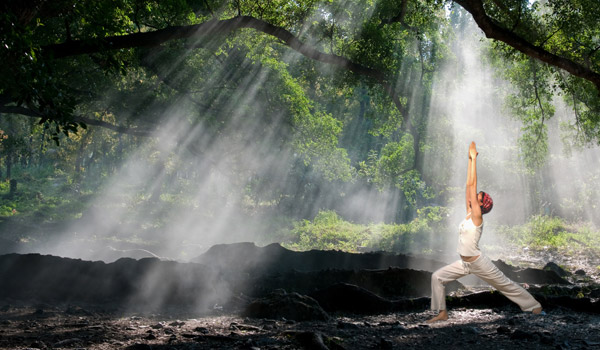
No. On the contrary, once you begin to live your life by the principles of Ayurveda, by starting at the physical sheath of cleanse and detox, the subtler sheaths of mind and emotions begin to slip more often in a meditative awareness! We see this happening to guests at Ananda very often. However, this isn’t an overnight process, one needs to follow the doctor’s guidelines while at Ananda, and then later through follow up consultations. But if you wish to experience a quicker result, then a visit for a Panchakarma of 21 to 28 days is a good choice to make.
Is Ayurveda recognised as a science?
Ayurvedic preventive and curative guidelines are highly scientific and applicable for generations to come. There are many evidences, Ayurvedic principles work better in most of the cases like chronic diseases, auto-immune conditions, hormonal imbalances or lifestyle disorders etc. but it needs to validate further with more advanced scientific procedures. For example: Ayurveda recommends the use of copper pot for water-purification as copper pot has antibacterial effect against important diarrheagenic bacteria including Vibrio cholerae, Shigella flexneri, enterotoxigenic Escherichia coli, enteropathogenic E. coli, Salmonella enterica typhi and Salmonella paratyphi, which is scientifically validate.
There are more than 30 therapies in Ayurvedic modalities such as Abhyangam, shirodhara etc. The health benefits of Abhyangam have been documented and published in scientific journals. https://www.liebertpub.com/doi/abs/10.1089/acm.2010.0281.
Scientists in Japan have studied the neurological benefits of Shirodhara several years ago. https://www.liebertpub.com/doi/10.1089/acm.2008.0273, https://ieeexplore.ieee.org/abstract/document/1411351.
Feature images © Vikas Khanna; mariusz_prusaczyk/iStock


